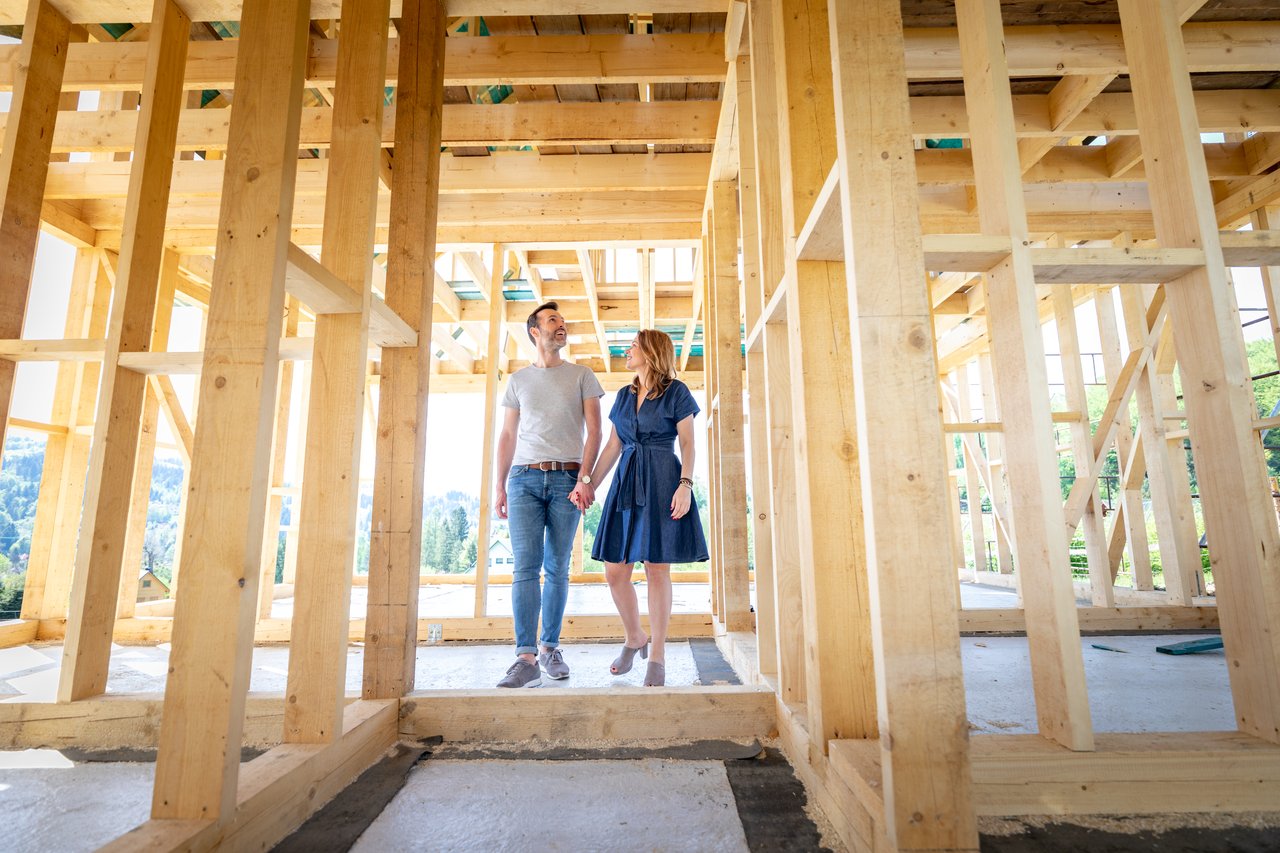
New Construction Homes in Bluffton SC: Avoid These Expensive Mistakes
Marinell Villa November 20, 2026
Marinell Villa November 20, 2026
If you're exploring new construction homes in Bluffton SC, it's easy to see why so many buyers fall in love with the idea of building a brand-new home. You get to choose your floor plan, select your homesite, customize your finishes, and create a space that fits your lifestyle.
Sounds pretty wonderful, doesn't it?
And it can be!
But here's something I always tell my buyers: Building a new home can get expensive very quickly if you don't understand what you're paying for.
I've seen buyers walk through a gorgeous model home, look at the advertised starting price, and think they've found the perfect house within their budget.
Well, not so fast!
That beautiful model home probably includes thousands of dollars in upgrades that aren't part of the base price. And we haven't even talked about the lot premium yet.
I'm Missy Yost with Coastward Realty, and my husband Darren and I help buyers navigate new construction communities throughout Bluffton, Hardeeville, and the surrounding South Carolina Lowcountry.
Whether you're moving to South Carolina for retirement, relocating to be closer to family, or simply looking for a fresh start, I want you to understand where your money is going before you sign a builder contract.
And if you're still weighing the financial side of relocating, our guide to the cost of living in Bluffton SC explores many of the ongoing expenses you'll want to consider beyond the price of your home.
Let's talk about the expensive mistakes I see buyers make, which upgrades I think are worth considering, and where you might be better off saving your money.
Let's say you're browsing new construction homes in Bluffton SC and find a beautiful floor plan advertised for $450,000.
Perfect! That's right in your budget.
Except that $450,000 may only be the starting point.
Depending on the builder and community, you could have several additional expenses before your home is finished.
These might include:
Lot premiums: The additional cost for a particular homesite, which could range from a few thousand dollars to $50,000, $75,000, or even $100,000 or more.
Structural upgrades: Changes to the floor plan, room sizes, doors, or other construction features.
Design center selections: Upgraded countertops, cabinetry, flooring, tile, and fixtures.
Additional improvements: Outdoor living spaces, landscaping, and other optional features.
Suddenly, that $450,000 home could cost nearly $600,000—and potentially more depending on your selections.
And that's not necessarily because the builder did anything wrong. It's because the advertised price and the cost of your finished home can be two very different numbers.
Before you start choosing floor plans or walking through model homes, determine your total comfortable budget.
Not just what you're qualified to borrow.
I'm talking about the total amount you're comfortable spending on your completed home, including the upgrades you actually need.
Here's a simplified example of how quickly those costs can add up:
These numbers are illustrative, not a quote from a specific builder. Closing costs, financing expenses, and other applicable costs are not included.
This is also where builder incentives come into play.
Some builders offer incentives toward design upgrades or closing costs. Those incentives can be valuable, but they change, and an incentive doesn't automatically make every upgrade a good investment.
And if a builder offers special financing through a preferred lender, don't assume it's automatically the best deal.
The Consumer Financial Protection Bureau's homebuying guidance offers helpful information about comparing financing options and understanding important considerations when purchasing a newly built home.
I want my buyers looking at the whole picture.
Missy Moment: I'd much rather help you establish a realistic budget before you visit the design center than watch you fall in love with upgrades you never intended to pay for.
If there's one thing I want buyers to remember when building a home in Bluffton SC, it's this:
You can change a lot of things about your house, but you cannot pick it up and move it to another lot!
And in my opinion, choosing the right homesite may be the most important decision you'll make during the entire process.
Throughout Bluffton and Hardeeville, you'll find homesites overlooking lagoons, golf courses, wooded areas, and neighboring properties.
Some have beautiful open views. Others provide more privacy.
And yes, some come with substantial lot premiums.
But a more expensive lot isn't automatically a better lot.
Let's say you find a beautiful lagoon lot with a west-facing lanai.
If you're moving here from the North, you may be thinking about how wonderful those sunsets will be.
And they can be beautiful!
But here's what I want you to consider.
In coastal South Carolina, the afternoon summer sun can be intense. That west-facing lanai may look amazing during your morning tour, but it could feel very different at five o'clock on a July afternoon.
Does that mean I'd tell you not to buy it?
Absolutely not.
I've had buyers who loved their west-facing lanais because they preferred spending time outdoors in the cooler mornings. Others had enough trees to provide shade later in the day.
What matters is understanding how you'll actually use the space.
Will you be enjoying morning coffee outside, spending afternoons reading on the lanai, or entertaining friends in the evenings?
Those details matter more than you might think.
Another issue I frequently discuss with buyers is privacy.
Maybe you've found a lot that backs up to a beautiful wooded area.
Wonderful!
But are those woods protected?
Or is there another phase of development planned behind them?
There's a big difference between a legally protected preserve and a wooded buffer next to land that could eventually be developed.
Before paying a premium for privacy, I want to understand what the community's development plans actually show.
Review the site plan, available development documents, and any recorded protections rather than relying on how the property looks today.
This is something I discuss in greater detail in our article about what buyers often overlook when purchasing a home in Bluffton SC. The home's surroundings, privacy, orientation, and future development can be just as important as the house itself.
You should also consider the size and shape of the lot.
Would you eventually like to install a pool? Add an outdoor kitchen? Extend your patio? Plant additional trees for privacy?
Not every homesite can accommodate those improvements.
And even when there's enough space, the community's architectural guidelines may restrict what you're allowed to build.
Choose a homesite that supports the lifestyle you want to enjoy for years to come.
Now we're getting into an area where I have some pretty strong opinions!
When it comes to builder upgrades, I believe some are worth serious consideration because they can be extremely difficult, expensive, or practically impossible to change once construction is complete.
I'm talking about structural options.
Depending on what the builder offers, these could include:
An extended great room or additional living space
Converting a flex room into a bedroom
Changing the kitchen layout or cabinet configuration
Adding larger sliding doors for indoor-outdoor living
Choosing eight-foot interior doors
Adding a fireplace or bathtub
Creating walk-up attic storage
Enlarging a shower or adjusting a bathroom layout
These are decisions I want buyers to think through before construction begins.
For example, maybe you're considering a larger sliding glass door that opens to your lanai.
Is that something you're going to enjoy every day?
Or would a more traditional French door work just as well for your lifestyle?
There's no single right answer.
But making structural changes after the home is finished can become a completely different—and much more expensive—project.
My rule of thumb: If something is behind the walls, part of the structure, or particularly difficult to change later, give it serious consideration now.
I'd much rather see you spend money on something you'll appreciate every day than on a really expensive backsplash.
Oh, the design center!
I completely understand why buyers get excited here.
You've got gorgeous countertops, beautiful flooring samples, cabinetry, tile, lighting, and fixtures.
Everything looks wonderful.
And before you know it, you've added another $70,000 in upgrades.
Now you're wondering what just happened!
Here's what I recommend.
I usually encourage buyers to look somewhere in the middle of the builder's available design options.
That doesn't mean selecting the cheapest finishes. You want good quality, especially in areas that get heavy daily use.
But you probably don't need the most expensive option in every category.
Remember when everyone wanted dark cherry cabinets?
Then everything became gray.
Now we're seeing more interest in warmer colors and natural wood tones.
And ten years from now, some of today's favorite styles will probably look dated too.
That's just how design trends work.
When choosing permanent finishes, focus on quality, durability, and designs that will remain appealing over time.
If you're moving to South Carolina with pets, spend a lot of time outdoors, or regularly entertain family and friends, flooring durability deserves attention.
Think about sandy shoes, muddy paws, and people walking in and out of your lanai.
You want something attractive, but you also need something that works for your lifestyle.
Compare the materials, maintenance requirements, warranties, and costs rather than making a decision based on appearance alone.
Let's say the builder includes a standard countertop in the base price.
When you upgrade to a more expensive countertop, you're paying an additional charge for that selection. You need to understand the builder's actual upgrade pricing and any credits being applied.
Sometimes the difference between two design levels can be thousands of dollars.
And you have to ask yourself whether that difference is worth it.
Remember, you don't need every single thing in your home to be absolutely perfect the day you move in.
Some cosmetic improvements can be made later, sometimes at a lower cost.
Not always, but it's worth comparing.
This is where buyers may have an opportunity to save some serious money.
There are certain improvements I would consider pricing out with independent contractors before automatically adding them to the builder contract.
But here's the important distinction.
Just because something can be completed after closing doesn't necessarily mean it will be cheaper or easier.
You need to compare costs, timing, financing, warranties, and community restrictions.
If you're dreaming about a private pool, find out whether your builder offers that option.
Then compare the builder's proposal with estimates from reputable local pool contractors.
Sometimes the builder's pricing is competitive. Other times, an independent contractor may offer more flexibility in pool size, shape, and design.
But before making either decision, confirm that your homesite can accommodate a pool and that the community will approve it.
That includes checking setbacks, easements, drainage considerations, and architectural requirements.
Most builders include at least some basic landscaping, although the details vary.
If you're interested in additional privacy trees, decorative landscaping, or a more elaborate outdoor design, completing those improvements after closing may make sense.
Just remember to include those expenses in your total budget.
Garage floor coatings and certain lanai surface improvements are other projects worth comparing with independent contractors.
Depending on what your builder charges and the materials involved, these improvements may be relatively straightforward to complete after closing.
Now, I want to be careful with this category.
Some outdoor improvements are easy to add later. Others aren't.
If you want to extend a roofline or make major structural changes to your lanai, that's something you should discuss with the builder before construction begins.
And some communities have restrictions on what you can add after closing.
Never assume you can make those changes later without first checking.
Here's something buyers sometimes overlook.
If you're financing the home, certain builder upgrades included in your purchase contract may be financed as part of your mortgage, subject to lender requirements and appraisal.
But improvements made after closing may require separate financing or cash.
You should also consider whether those improvements might affect your property's assessed value and future property taxes.
For homes in Bluffton and Hardeeville, I recommend checking with the appropriate county office. The Beaufort County Assessor's Office and Jasper County Assessor's Office provide information about property assessments, classifications, and other tax-related considerations.
That's especially important if you're relocating from another state or purchasing a second home, since your property's classification can affect your overall tax situation.
The goal isn't simply to find the lowest initial price.
It's to understand the total financial impact of each decision.
I know what you're thinking.
"Missy, I'm building this house for myself. Why should I worry about selling it?"
And I understand that.
I absolutely want you to love your home.
But even when you're building what you believe will be your forever home, life can change.
You might decide to move closer to family, your needs may change, or you might simply want a different lifestyle a few years down the road.
When that happens, you want your home to appeal to as many potential buyers as possible.
Maybe you absolutely love bright blue kitchen cabinets.
And there's nothing wrong with that!
But the next buyer might not share your taste.
I've toured plenty of resale homes where buyers loved the floor plan, location, and view but immediately started calculating the cost of changing the finishes.
Suddenly, that otherwise beautiful home wasn't quite as appealing.
That's why I usually encourage buyers to keep major permanent finishes relatively timeless.
If you love bold colors, consider incorporating them through artwork, pillows, furniture, and accessories—things you can easily change.
You still get a home that reflects your personality without potentially limiting its appeal to future buyers.
And remember, expensive builder upgrades don't necessarily translate into an equivalent increase in resale value.
Spend money on features you'll genuinely enjoy, but don't assume you'll recover every dollar when you sell.
So, after working through all these decisions, where would I actually recommend spending your money?
Here's the order I generally suggest to my buyers.
Of course, every buyer's situation is different.
Someone who plans to spend every afternoon in a screened lanai may place a higher priority on outdoor living features.
Another buyer may care more about kitchen functionality or a floor plan that accommodates visiting family members.
That's why I don't believe in simply checking every upgrade box the builder offers.
I want buyers to spend their money on the things that actually improve the way they'll live in the home.
Spend your money on the things you can't easily change later. That's where I believe thoughtful planning makes the biggest difference.
Building a new construction home in Bluffton SC can be a wonderful experience.
You have the opportunity to create a home that suits your lifestyle, choose features you'll enjoy for years, and start a new chapter in a beautiful part of South Carolina.
But I don't want you getting so caught up in the excitement of a model home that you overlook the decisions that matter most.
Understand the full cost before committing.
Choose your homesite carefully.
Prioritize structural options that are difficult to change later.
And don't feel pressured to purchase every upgrade the builder offers.
Most importantly, think about how you want to live in the home, not just how you want it to look on move-in day.
My husband Darren and I help buyers navigate new construction homes throughout Bluffton, Hardeeville, and the surrounding Lowcountry. From comparing builders and communities to evaluating homesites and upgrade decisions, we're here to help you make informed choices.
Whether you're moving to South Carolina in six months or planning your retirement two years from now, it's never too early to start exploring your options.
Thinking about building a home in Bluffton or Hardeeville?
Reach out to Coastward Realty at (843) 733-9766. We'd love to help you explore your options and avoid expensive surprises along the way.
Because I'd much rather help you avoid a costly mistake before you sign a contract than try to fix it afterward.
Before You Build Your Dream Home in Bluffton, Discover the Hidden Costs, Lot Premiums, Builder Upgrades, and Costly Mistakes You’ll Want to Avoid.

After 12 years in the Lowcountry, Missy shares the real cost of living in Bluffton SC—from everyday expenses and hidden homeownership costs to what makes coastal livin… Read more
Discover why two homes with the same price tag can have very different ownership costs—and what Bluffton buyers need to know about HOA fees, insurance, property taxes,… Read more

From active adult and golf communities to waterfront retreats and quiet neighborhoods, discover which Bluffton lifestyle fits your needs, priorities, and vision of hom… Read more
What I'd Do Differently After More Than a Decade of Living in the Lowcountry—and What You Should Know Before Making the Move
The Real Cost of Buying New Construction vs. Resale in Bluffton SC—From Builder Incentives and Hidden Expenses to Long-Term Value.
55+
Discover how Bluffton’s Lowcountry location puts beaches, historic cities, Florida getaways, and even the Blue Ridge foothills within easy road-trip reach.
What to Look Beyond the Pretty Kitchen—From Homesites and Insurance to Maintenance, Location, and Resale Value
A Real-World Look at Sun City Hilton Head, Latitude Margaritaville, New Construction, Resale & Builder Incentives
Whether you’re buying, selling, or growing your career in real estate, Coastward Realty is here to guide you. We bring local knowledge, personalized service, and a client-first approach to every step of the journey.