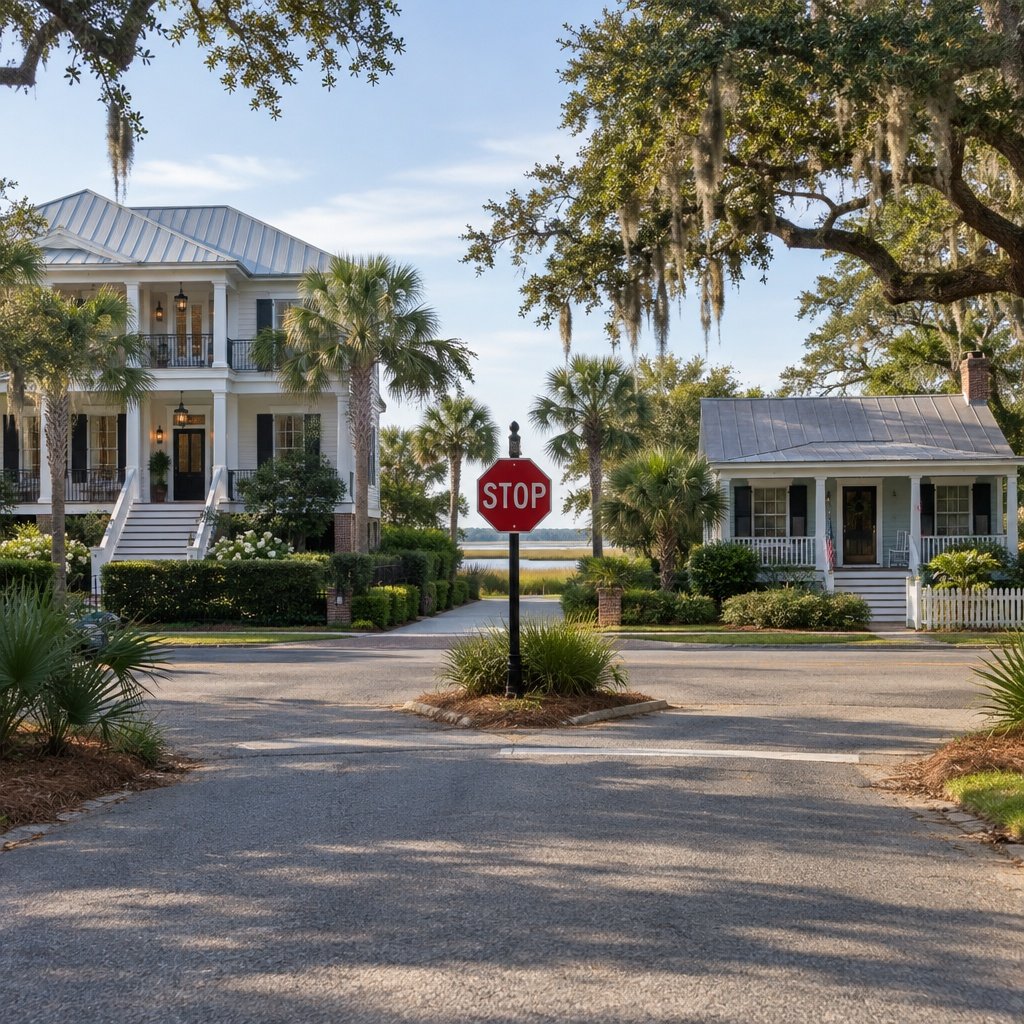
STOP Shopping by House Price in Bluffton SC – Here's Why
Marinell Villa November 5, 2026
Marinell Villa November 5, 2026
Two $700,000 homes can have very different monthly costs. Here's what you need to know about HOA fees, insurance, property taxes, and the true cost of owning a home in the Lowcountry.
By Missy Yost | Co-Founder, Coastward Realty
If you're thinking about moving to Bluffton SC, and you tell me, "Missy, our price point is $700,000," I know exactly what you probably mean.
You've talked to your lender. You've looked at your down payment, interest rate, property taxes, and insurance. You've run the numbers, and you're comfortable purchasing a home around $700,000.
That makes sense. It's how most people begin their home search.
But here's something I wish more buyers understood before they start falling in love with houses online.
Two homes listed at exactly the same price can have VERY different monthly ownership costs.
And I'm not talking about a few dollars here and there.
Depending on the community, one home could cost you hundreds of dollars more every month than another—even when both have the same purchase price.
Why?
Because in Bluffton, the price of the house is only ONE part of what it actually costs to live there.
Between HOA fees, POA dues, private club memberships, homeowners insurance, property taxes, and utilities, those additional expenses can change your budget pretty quickly.
In one community, your $700,000 budget might work beautifully.
In another, we might need to look closer to $650,000 because of the additional monthly costs.
And in a third? You might actually be comfortable spending MORE on the house because the ongoing expenses are lower.
If you're still exploring neighborhoods, our guide to the Best Communities in Bluffton SC: Which One Fits Your Lifestyle? is a great starting point.
One of the things that surprises people relocating to Bluffton is just how differently our communities operate.
You might be comparing homes in Sun City Hilton Head, Latitude Margaritaville Hilton Head, Hampton Lake, or one of our beautiful private golf communities.
They may offer homes in similar price ranges, but what you're paying for beyond the house itself can be completely different.
Some neighborhoods have one regular association fee covering common-area maintenance and certain amenities.
Others have multiple layers of expenses, including POA dues, club memberships, golf fees, and additional neighborhood charges.
And those costs don't always appear clearly in online listings.
That's why I encourage buyers to think about the community and lifestyle—not just the house—before narrowing their search.
Let's start with some expenses that confuse almost every relocation buyer I meet.
An HOA is a Homeowners Association, while a POA is a Property Owners Association.
Both generally collect fees to help maintain the community and provide certain services.
Depending on the neighborhood, those fees may cover:
But here's what I want you to understand.
Just because two neighborhoods charge HOA fees doesn't mean those fees cover the same things.
One community might charge $300 per month and include quite a few services.
Another might charge less but leave more maintenance responsibilities to individual homeowners.
So when someone asks, "Missy, which community has the cheapest HOA?"
My next question is usually, "What are you actually getting for your money?"
Because the lowest fee doesn't always mean the best value.
If you're considering a condo, villa, or townhome around Bluffton or Hilton Head Island, you may also encounter regime fees.
These typically help cover shared property expenses, which might include exterior maintenance, common-area landscaping, certain insurance coverage, water, or structural repairs.
But don't assume everything outside your front door is automatically taken care of.
One regime may cover quite a bit.
Another may leave homeowners responsible for expenses they weren't expecting.
That's why it's important to review the governing documents, insurance arrangements, and maintenance responsibilities before buying.
Now, let's talk about private club communities.
Bluffton has some wonderful golf and lifestyle neighborhoods, including Belfair, Berkeley Hall, Colleton River, and Riverton Pointe.
Depending on the community, residents may enjoy championship golf, fitness facilities, swimming pools, dining, tennis, pickleball, and social events.
But the way membership works can be VERY different.
A social membership and a golf membership aren't necessarily the same thing.
You may encounter mandatory membership requirements, different membership categories, initiation fees, and recurring dues separate from association fees.
And there's a big difference between a one-time initiation fee and an annual membership expense.
One affects how much cash you need upfront.
The other affects your ongoing budget.
Both matter.
That's why Darren and I encourage buyers to review the current membership requirements and fee schedules for the specific property and community they're considering.
And then there are special assessments.
These are additional charges an association may collect beyond regular dues to cover things like major repairs, infrastructure improvements, or amenity renovations.
Sometimes they're paid in one lump sum. Other times, they're collected over several payments.
Before buying, it's worth asking whether any special assessments have been approved or proposed and reviewing the association's available financial information.
Because a listing advertising $300 per month in HOA fees doesn't necessarily mean $300 represents your entire community expense.
And that brings me to something I see happen more often than you might expect.
Now, let's put some numbers to this.
Imagine you're relocating to Bluffton with a comfortable purchase budget of $700,000.
You find two beautiful homes.
House A costs $700,000.
House B also costs $700,000.
For simplicity, let's assume identical financing terms.
You might expect their monthly expenses to be pretty similar, right?
Not necessarily.
Expense | House A | House B |
|---|---|---|
Purchase Price | $700,000 | $700,000 |
HOA / POA Fees | $321 | $189 |
Club Dues | $0 | $265 |
Homeowners Insurance | $125 | $152 |
Electricity | $120 | $100 |
Total Monthly Expenses Shown | $566 | $706 |
These amounts are illustrative, not current property-specific quotes. The monthly totals exclude mortgage payments, property taxes, flood insurance, maintenance, and other potential charges.
Look at that.
House A has an HOA fee of $321 per month.
House B has a POA fee of only $189.
At first glance, House B looks cheaper, doesn't it?
But wait.
House B also has $265 in monthly club dues.
So its total community expense is actually $454 per month.
That's already $133 MORE than House A.
And we haven't even talked about insurance or utilities.
Once we include those additional expenses, House B costs $706 per month compared with House A's $566.
The Difference Adds Up
Time Period | Additional Cost of House B |
|---|---|
Monthly | $140 |
Annually | $1,680 |
Over 5 Years | $8,400 |
Over 10 Years | $16,800 |
Illustrative arithmetic assuming unchanged expenses. Actual fees, insurance premiums, and utility costs can increase or decrease.
On paper, they're both $700,000 houses.
But when it comes to living in them?
They're not financially identical.
And remember, we haven't even included property taxes or every potential ownership expense.
Sometimes the house that looks more expensive is actually the better fit once we compare community fees, insurance, and the improvements already included.
If you're considering Bluffton, Hilton Head Island, or Hardeeville, reach out to Coastward Realty or call us at (843) 733-9766.
We'll help you compare communities based on what they really cost to own—not just what the listings say.
Let's say House A has a brand-new roof.
House B has a roof that's five years old.
A properly installed, well-maintained roof can have many years of useful life remaining.
But insurance companies don't necessarily evaluate roof age the same way buyers do.
Roof age, materials, condition, wind resistance, construction details, location, and other underwriting factors can influence insurance premiums.
That doesn't mean every five-year-old roof will cost more to insure than a brand-new one.
I'm saying you need to understand what the home's characteristics could mean for your insurance expenses.
In our hypothetical example, House A has an estimated insurance cost of $125 per month, while House B is $152.
That's another $27 each month.
And here's something I want buyers to remember.
The insurance premium the current homeowner pays isn't necessarily what YOU will pay.
Your coverage, deductible, insurer, available discounts, and other circumstances could result in a different quote.
The South Carolina Department of Insurance offers helpful consumer resources for comparing coverage and understanding homeowners insurance.
Because we're talking about coastal South Carolina, flood risk also deserves attention.
You can begin reviewing a property's mapped flood risk through the FEMA Flood Map Service Center.
But flood-zone information alone won't tell you what an individual policy will cost, whether coverage is required by your lender, or whether purchasing flood coverage would be prudent.
That's why I encourage buyers to obtain property-specific insurance quotes before making a final purchasing decision.
Now, let's talk about something every homeowner deals with.
The electric bill.
Not every neighborhood has the same electric provider.
Depending on the address, your electricity may come from Dominion Energy or Palmetto Electric Cooperative.
Rates and charges differ by provider, and actual usage has a significant impact on monthly bills.
In our example, House A has an estimated electric expense of $120 per month, while House B costs $100.
So House B actually has the lower electric bill.
But that $20 savings doesn't make up for its higher community dues and insurance expenses.
When comparing homes, ask for available utility history and consider how your household's usage might differ.
And if you're comparing newer homes with established properties, our New Construction vs. Resale in Bluffton SC guide explains more about the expenses that don't always appear in the listing price.
Here's another issue that catches relocation buyers off guard.
They find a home they love, look up the seller's current property taxes, divide that annual number by 12, and plug the amount into their monthly budget.
Seems reasonable, right?
After all, it's an actual tax bill.
But here's the problem.
The seller's property taxes may not reflect what YOU will owe after purchasing the home.
In South Carolina, property tax calculations depend on factors including the property's taxable value, assessment classification, applicable millage rates, and available tax exemptions or relief.
One important distinction is whether the property qualifies as your primary legal residence.
Qualifying primary residences generally receive a 4% assessment ratio.
Other residential property, such as many second homes, is generally assessed at 6%.
And let me clarify something.
That doesn't mean you're paying 4% or 6% of the home's purchase price in property taxes every year!
Those percentages are assessment ratios used to calculate taxable assessed value.
For more information, the South Carolina Department of Revenue explains the 4% legal residence classification and related requirements.
The South Carolina Revenue and Fiscal Affairs Office also explains how property taxes are calculated.
For homes in Beaufort County, buyers can review local assessment information through the Beaufort County government website.
Whether you're buying a full-time residence or a second home for winter visits, I encourage you to get a tax estimate based on your intended ownership situation.
Because those differences belong in your budget BEFORE you purchase.
When buyers contact Darren or me about moving to Bluffton, we always discuss their budget.
But here's what I'd rather understand.
Not simply the maximum purchase price your lender has approved.
I want to know what you're comfortable spending on housing every month.
Let's say that number is $5,000.
That budget needs to account for mortgage principal and interest, property taxes, insurance, association fees, club dues, utilities, and expected maintenance.
Here's a simplified example.
Expense | Illustrative Monthly Amount |
|---|---|
Total Comfortable Housing Budget | $5,000 |
HOA / POA and Club Dues | $400 |
Property Taxes | $350 |
Homeowners / Other Insurance | $200 |
Utilities | $150 |
Maintenance Reserve | $150 |
Remaining for Mortgage Principal and Interest | $3,750 |
All amounts are hypothetical. The property-tax and insurance figures are not quotes or estimates for a particular $700,000 home. This is a budgeting exercise, not a mortgage preapproval or affordability determination.
See what I'm getting at?
When we account for the ongoing expenses first, we have a much clearer idea of what might be available for the mortgage.
And this is where the community you choose can make a big difference.
If you're comparing two neighborhoods and one has significantly higher mandatory dues, you may need to adjust the home price you're targeting.
That's why I might show you $650,000 homes even when you originally told me your budget was $700,000.
And if you're paying cash?
This conversation is JUST as important.
You might not have a mortgage payment, but property taxes, insurance, maintenance, utilities, and community dues don't disappear.
Those bills continue long after closing day.
Now, here's where things get interesting.
Let's say I show you two properties.
One costs $650,000.
The other costs $700,000.
At first glance, the $650,000 house looks like the more affordable choice.
But what if it's brand new and still needs window treatments, landscaping, a screened porch, and fencing?
And what if the $700,000 resale already includes all those improvements?
Suddenly, that $50,000 difference starts looking a little different.
Now, that doesn't automatically mean the resale is the better financial choice.
You still have to consider financing, insurance, maintenance, the property's condition, and how much you personally value those improvements.
But it shows why the listing price doesn't tell the whole story.
It's also why we explore builder incentives, upgrades, homesite premiums, and improvements in our New Construction vs. Resale in Bluffton SC guide.
Because the cheaper house isn't always the less expensive decision.
And spending more doesn't automatically mean you've made a mistake.
We have to look at the complete picture.
When Darren and I work with buyers, we're not just searching for properties below a certain listing price.
We're looking at how the home, community, and monthly expenses fit together.
And that means asking more questions than simply, "How much does this house cost?"
Here's what I encourage every relocation buyer to review.
What to Verify | Why It Matters |
|---|---|
HOA and POA Fees | Understand all mandatory recurring charges and what they include |
Club Memberships | Confirm initiation fees, dues, and membership requirements |
Special Assessments | Identify approved or proposed additional expenses |
Homeowners Insurance | Obtain a property-specific quote |
Flood Insurance | Evaluate flood risk and coverage needs |
Property Taxes | Estimate taxes based on your intended ownership and eligibility |
Utilities | Consider provider, home efficiency, and anticipated usage |
Maintenance | Budget for upkeep and future repairs |
Closing and Transfer Costs | Account for one-time expenses |
Immediate Improvements | Budget for upgrades or repairs after closing |
This is particularly important when you're relocating from another state.
You may be familiar with homeownership costs in your current area, but Lowcountry community fees and ownership expenses can be quite different.
That's why I encourage buyers to compare several neighborhoods before narrowing their search.
And if you're still in the planning stages, our Moving to Bluffton SC in 2026? Here's What I'd Do Differently guide covers other decisions I'd approach differently if Darren and I were relocating here today.
The goal isn't simply to find a house under your maximum budget.
It's to find the right home, in the right community, with expenses that make sense for your life.
So, here's what I really want you to take away from all this.
Stop shopping for a house based ONLY on the listing price.
I'm not saying purchase price doesn't matter.
Of course it matters!
But a $700,000 house in one Bluffton community doesn't necessarily cost the same to own as a $700,000 house somewhere else.
One may have higher club dues.
Another may have lower HOA fees.
One may have a newer roof and potentially lower insurance expenses.
Another may already include thousands of dollars in improvements that you'd otherwise have to pay for yourself.
And all of those things deserve consideration.
I don't want you falling in love with a house, moving in, and realizing six months later that your monthly expenses are much higher than you anticipated.
And I certainly don't want you crossing a wonderful community off your list because an online listing incorrectly displayed an annual fee as a monthly charge.
The goal isn't to buy the cheapest house.
And it definitely isn't to buy the most expensive house you can qualify for.
The goal is to find a home and community that give you the life you're hoping to have at a total cost you're comfortable with.
Because you're not just buying square footage, countertops, or a screened porch.
You're choosing how you want to live.
And that's a much bigger decision than the number on a real estate listing.
Ready to explore? Connect with Coastward Realty or call us at (843) 733-9766.
I'm Missy Yost with Coastward Realty.
Thanks for spending some time with me, and I'll see you next time!

Before You Build Your Dream Home in Bluffton, Discover the Hidden Costs, Lot Premiums, Builder Upgrades, and Costly Mistakes You’ll Want to Avoid.

After 12 years in the Lowcountry, Missy shares the real cost of living in Bluffton SC—from everyday expenses and hidden homeownership costs to what makes coastal livin… Read more
Discover why two homes with the same price tag can have very different ownership costs—and what Bluffton buyers need to know about HOA fees, insurance, property taxes,… Read more

From active adult and golf communities to waterfront retreats and quiet neighborhoods, discover which Bluffton lifestyle fits your needs, priorities, and vision of hom… Read more

What I'd Do Differently After More Than a Decade of Living in the Lowcountry—and What You Should Know Before Making the Move
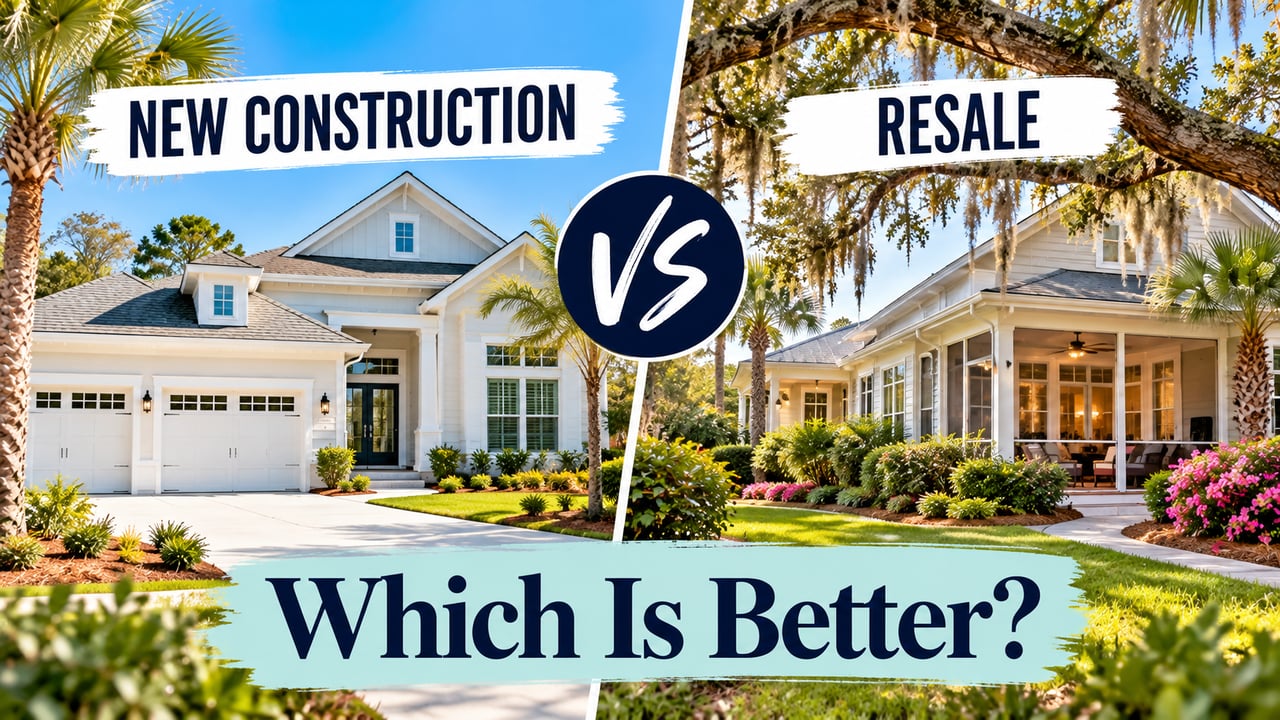
The Real Cost of Buying New Construction vs. Resale in Bluffton SC—From Builder Incentives and Hidden Expenses to Long-Term Value.

55+
Discover how Bluffton’s Lowcountry location puts beaches, historic cities, Florida getaways, and even the Blue Ridge foothills within easy road-trip reach.
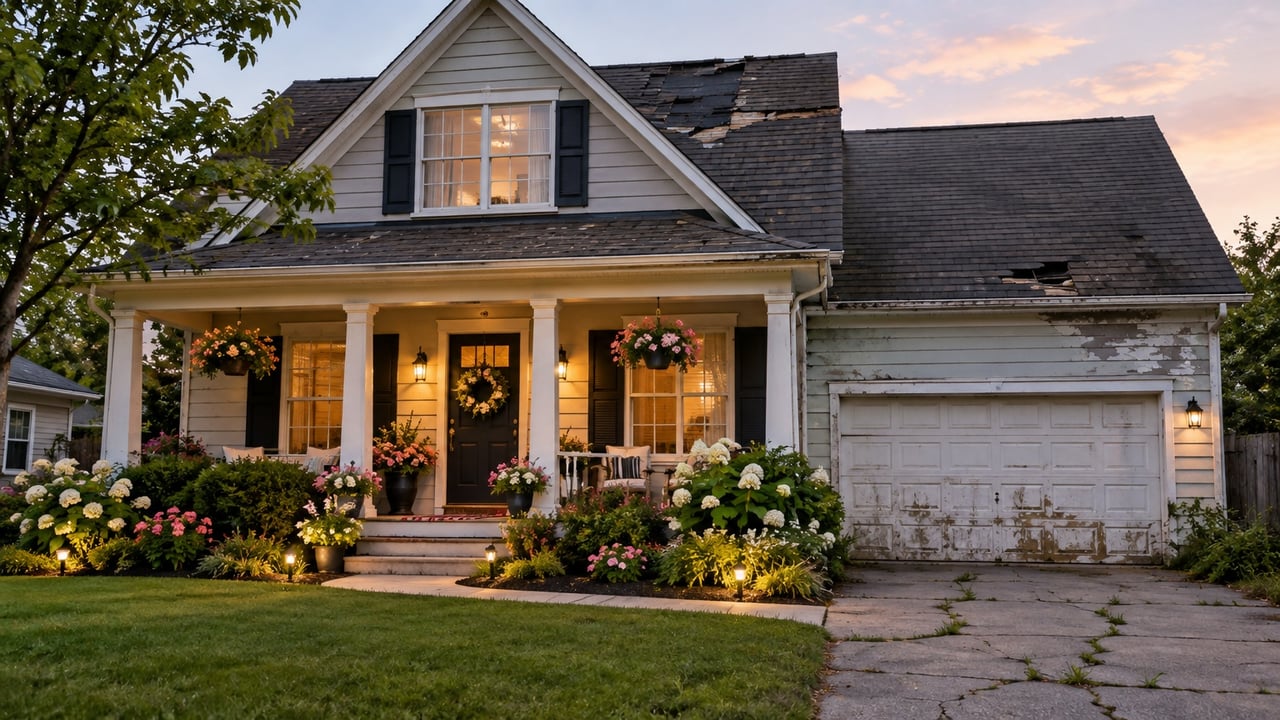
What to Look Beyond the Pretty Kitchen—From Homesites and Insurance to Maintenance, Location, and Resale Value
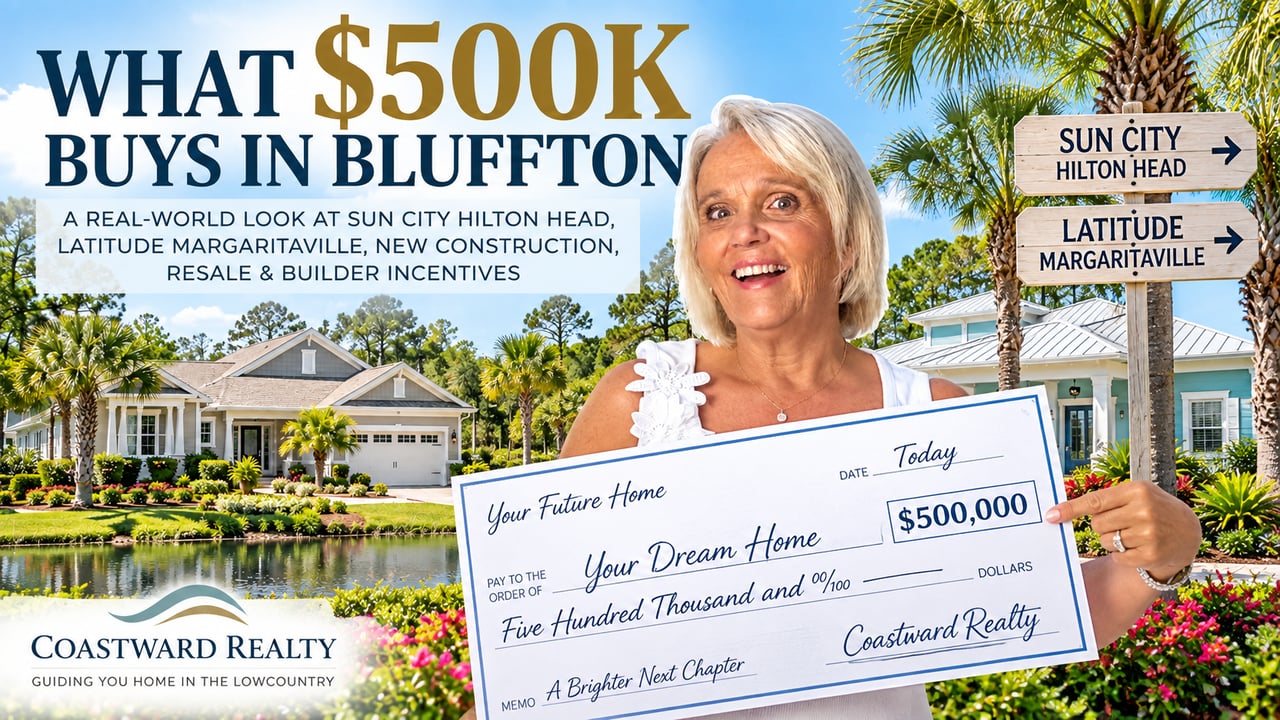
A Real-World Look at Sun City Hilton Head, Latitude Margaritaville, New Construction, Resale & Builder Incentives
Whether you’re buying, selling, or growing your career in real estate, Coastward Realty is here to guide you. We bring local knowledge, personalized service, and a client-first approach to every step of the journey.